CHAOS, TRANSLATED INTO HARMONY
Carlos Blanco Artero
DATES & LOCATION
September 2025 – November 2025
S Gallery Madrid
c/ Ferraz 78, 28008 Madrid
ABOUT THE EXHIBITION
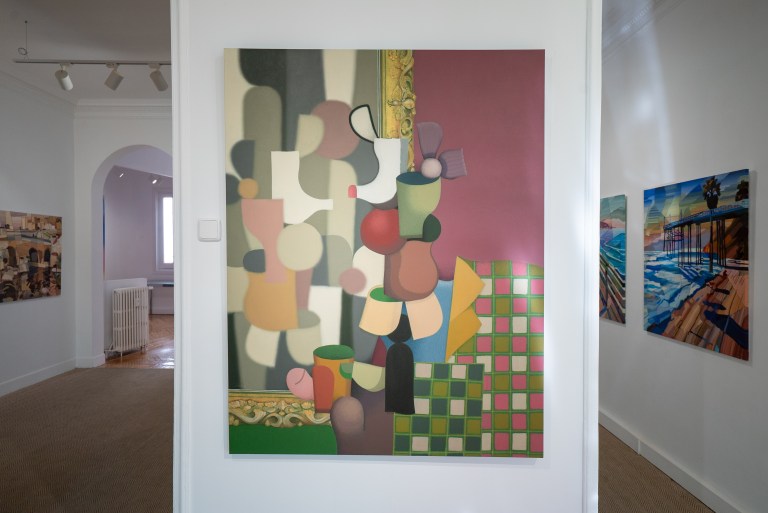
Carlos Blanco turns painting into a space of introspective stillness, where abstraction becomes a poetic language. Fragmenting images almost to the point of dissolution, his work explores the boundary between the visible and the invisible, evoking a quiet tension that invites contemplation. Between mystery and clarity, his compositions become mirrors of interiority—delicate structures of thought that transform chaos into a deeply personal visual order.

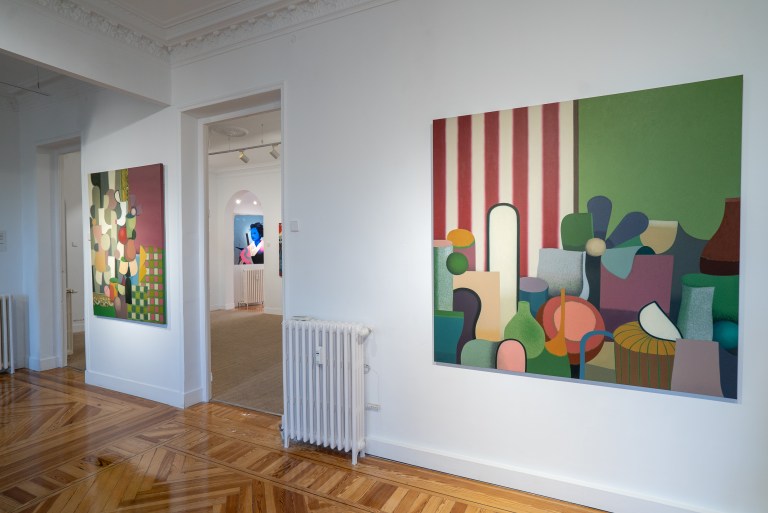
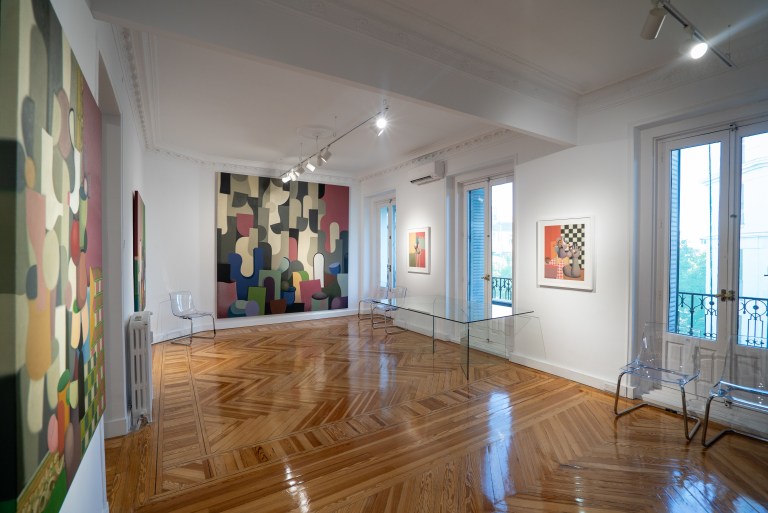
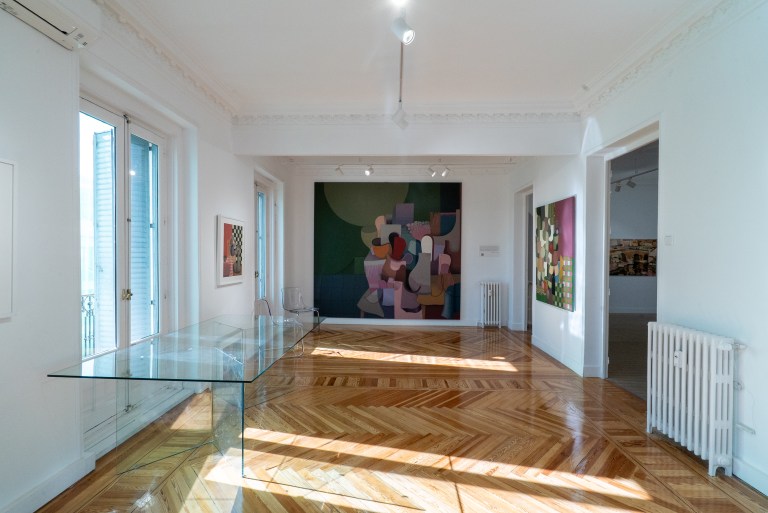
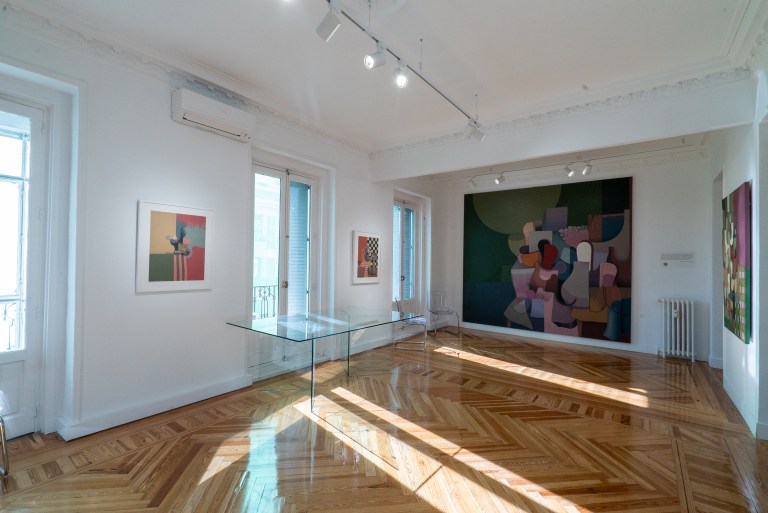

FEATURED ARTWORKS


ABOUT THE ARTIST
CARLOS BLANCO ARTERO
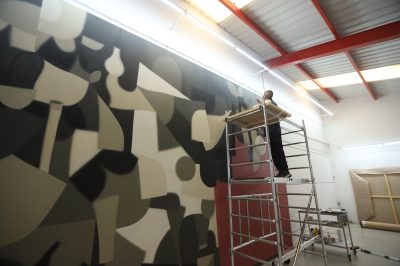
Carlos Blanco blends figuration and abstraction to explore identity and perception. Influenced by cities like Berlin and New York, and artists such as Picabia and Condo, his expressive, fragmented works challenge visual conventions and appear in collections worldwide.
CURATORS' COMMENTARY
by Alfonso de la Torre
2024
Blanco Artero possesses a unique ability to fracture images into moments, turning his paintings into true mirror games of reality. While they may approach the real, his works often shift toward intimacy, suggesting an internalization of what is painted, echoing something ancient and unresolved within us. His voice arrives slowly, evolving into a poetic language that weaves a personal thread of resistance—an aesthetic world of its own.
As if choosing to represent a longing for images that remain in waiting, his painting conveys a desire for introspection within space. Fully aware of the enchantment certain images can cast over thought, he attempts to render the invisible visible by exploring an alternate spatial dimension—nudging us toward the stark nakedness of silence. These images hold their interpretation in suspense, a collision of unresolved meaning. His abstraction, grounded in resolved imagery, forms a world of extraordinary complexity expressed through his unwavering visual imagination. Among his key references, we find Georges Condo and Francis Picabia, yet his canvases also resonate with the mirrored landscapes of Maria Helena Vieira da Silva or could seamlessly host the imagery of David Smith.
To observe his work is to confront the fascination of mystery and the questions housed within that unknown space between the visible and invisible. It is a deciphering in process, the illusion of a shift toward the one who, now silent, contemplates. Painting becomes an exercise in rupture and revelation—a way of thinking through image. In this, Carlos Blanco emerges as a seeker of unfamiliar terrains, of questions yet to be formed. It is as though, painting in a state of shock, his restlessness suggests that painting is not a destination but a boundless expanse—a distance never fully satisfied.
Chaos, translated into harmony
by Pablo García
Madrid, 2025
Carlos Blanco builds his visual universe out of an apparently irresolvable tension: translating disorder into balance, transforming saturation into structure. With almost surgical meticulousness, his painting addresses the complexity of a visual world in collapse. Fragmented figures, superimposed planes, distorted volumes, and a precise chromatic palette come together in compositions that, far from rejecting confusion, organize it as an aesthetic system. Blanco turns chaos into visual music.
In this exhibition, his work presents itself as an inquiry into the limits of form. The pieces orbit between neo-figuration and abstraction, hinting at a lineage of influences that runs from Picasso to Condo, from Bacon to Picabia, without establishing hierarchies. On the more figurative side, the faces and bodies that emerge from the convulsive line recall the expressive tensions of “Black Spain,” while on the abstract side the forms glide sensually across the pictorial plane like painterly choreographies that evoke musical scores.
Each work functions as a visual score: a space where rhythm, repetition, pause, and variation are as important as line or color. The painting thus approaches classical music—an explicit reference in many of his titles—through a synesthetic sensibility. Line becomes melody, the mark becomes the beat, space becomes silence. This approach endows his work with a cadence that exceeds the visual, inviting it to be “listened to” with the eyes.
Carlos Blanco does not seek to represent the world; he reinterprets it. Drawing on historical references and a logic of formal accumulation, he generates a personal iconography that, far from overflowing, arranges itself with structural elegance. In a time marked by information overload and perceptual instability, his work asserts itself as a manifesto in favor of balance without denying complexity. The harmony he proposes is not simplification but active synthesis. In it, chaos finds its form.