10 YEARS. 10 ARTISTS. 10 STORIES.
Carlos Blanco Artero
DATES & LOCATION
September 2026 – October 2026
S Gallery Madrid
c/ Ferraz 78, 28008 Madrid
ABOUT THE EXHIBITION
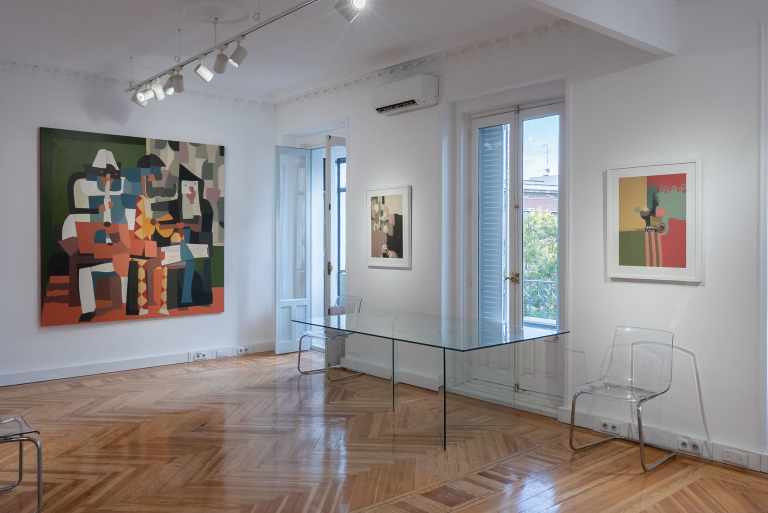
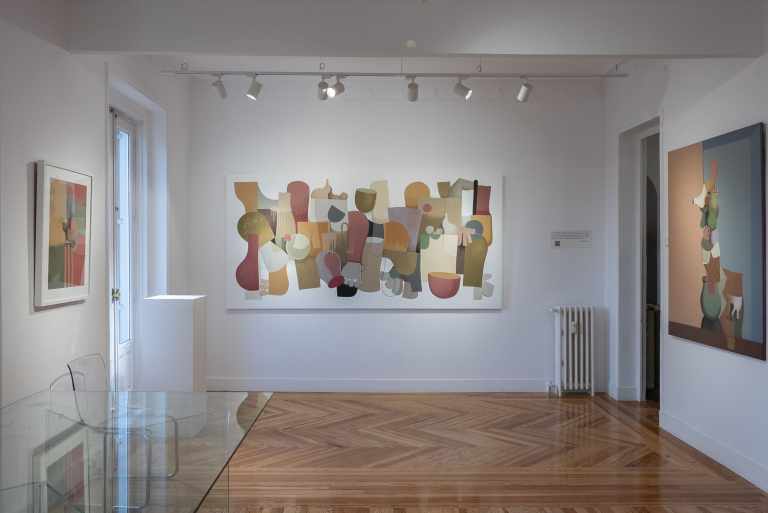
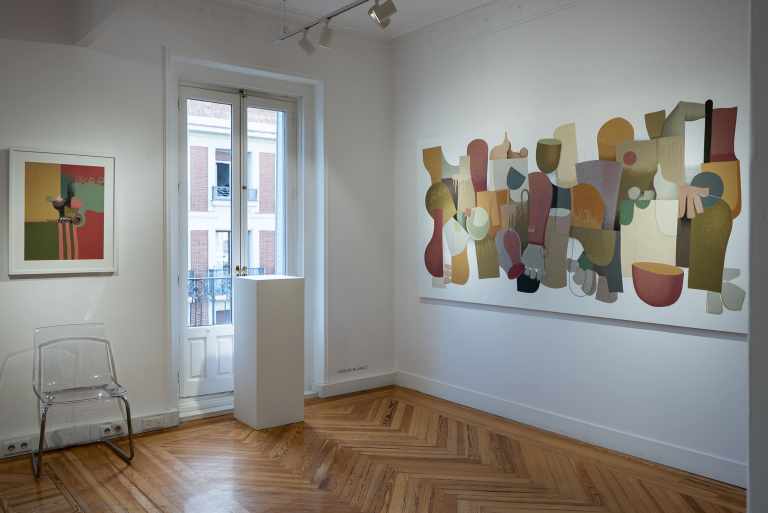
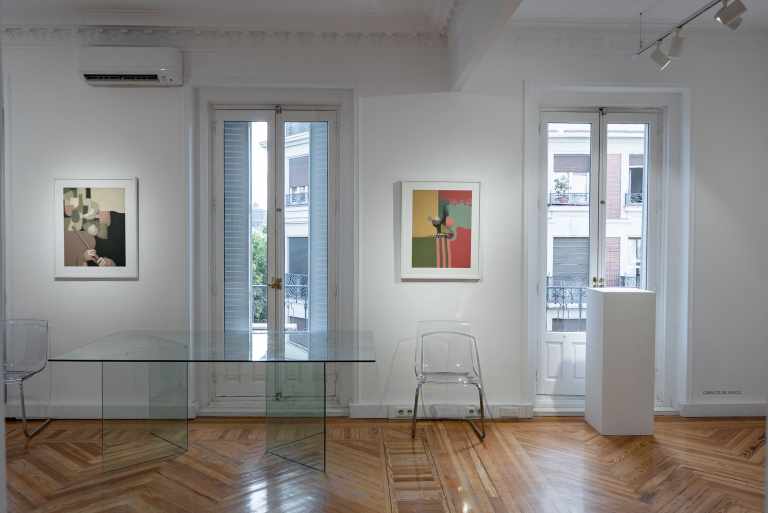
Carlos Blanco’s work explores the tension between deformation and balance: how far a figure can be distorted without disappearing, and how chaotic an image can become without losing structure. Through series such as Neofiguración, Crowds, and Picasso, the exhibition traces more than two decades of research into the body, drawing, matter, and color.
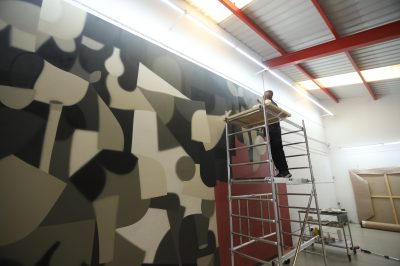
His paintings inhabit an unstable territory between figuration and abstraction, where apparent chaos is always held by rigorous composition. In the context of 10 Years. 10 Artists. 10 Stories, Blanco’s work reveals a central paradox: sometimes, for an image to emerge fully, it must first be pushed to the edge of disappearance.

FEATURED ARTWORKS


ABOUT THE ARTIST
CARLOS BLANCO ARTERO
Carlos Blanco blends figuration and abstraction to explore identity and perception. Influenced by cities like Berlin and New York, and artists such as Picabia and Condo, his expressive, fragmented works challenge visual conventions and appear in collections worldwide.
CURATORS' COMMENTARY
The Limits of Form
by Pablo García
Madrid, 2026
For more than two decades, Carlos Blanco has been working around the same tension: how far can a figure be distorted without disappearing, and to what extent can an image become turbulent without losing its balance?
In Carlos Blanco’s painting, distortion does not mean destroying form, but subjecting it to constant pressure. The body, initially the almost absolute protagonist of his work, has gradually lost definition and autonomy, coming to share the pictorial space with drawing, matter, colour, and the painted surface itself. From this shift emerges an unstable territory between figuration and abstraction, where recognising an image matters as much as witnessing its transformation.
The selection brought together in this exhibition traces this question through different moments and registers of his practice. The works from Neofiguration, Crowds, and Picasso do not function as separate chapters, but as variations on the same investigation sustained over time.
In Neofiguration, drawing retains a dominant presence. The line constructs, fragments, and distorts figures that remain recognisable even as stains and brushstrokes begin to compete with them for space. Areas of extraordinary precision coexist with others that are deliberately open or incomplete, creating an image that oscillates between descriptive virtuosity and its own decomposition.
In Crowds, this tension multiplies. The figure is no longer presented as an isolated individual but becomes multitude, repetition, and accumulation. Lines intersect, bodies overlap, and areas of white space act as pauses within densely articulated compositions. Figuration and abstraction, drawing and painting, concentration and emptiness coexist within a structure that seems to expand without ever losing its restraint.
Picasso introduces another shift: a dialogue with the history of painting. Carlos Blanco directly engages with an artist he considers one of the fundamental figures of modern art, not to reproduce his language, but to subject some of his images to his own formal system. The series functions as a conversation between two ways of distorting the figure and organising colour, but also as a reflection on transmission: on what happens when an inherited image is looked at again from another time.
What unites these series is precisely what remains constant. Beneath the stains, overlaps, corrections, and accumulations, there is always a rigorous organisation. Carlos Blanco controls weight, direction, volume, and chromatic intensity until what appears accidental retains a precise structure. Here, chaos is a construction. And the grotesque, far from functioning as an anomaly or rupture, becomes a possibility for harmony.
Carlos Blanco’s trajectory can thus be read not as a succession of styles, but as the progressive refinement of a single question. For more than twenty years, he has continued to pursue it without seeking to resolve it definitively. Each series alters the conditions. Each painting shifts the previous boundary ever so slightly.
Within the context of 10 Years. 10 Artists. 10 Stories., Carlos Blanco’s work introduces a fundamental paradox: sometimes, for an image to reveal itself, it must first be pushed to the brink of disappearance.