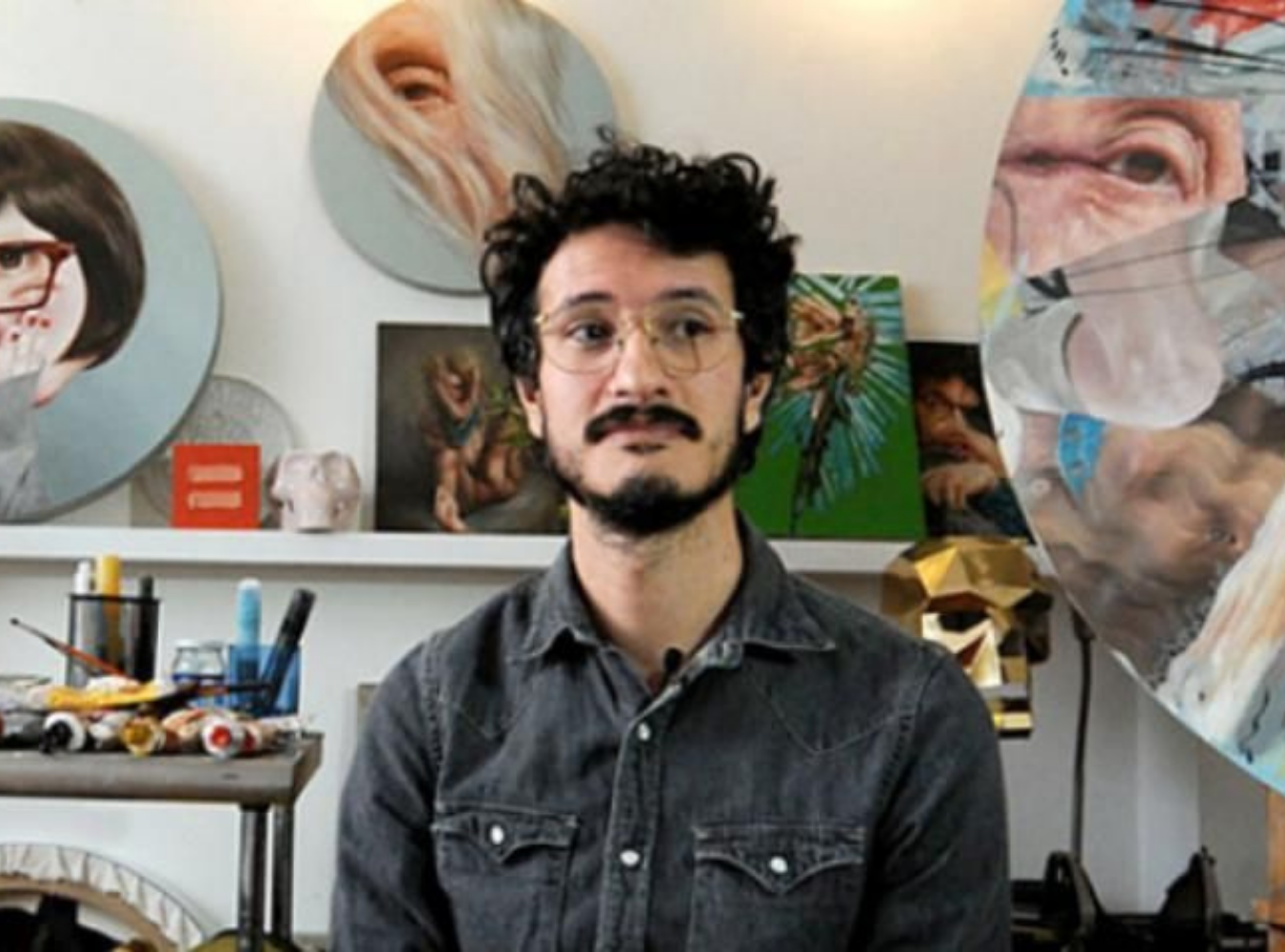
With experience in international advertising, the self-taught painter began his artistic career in 2013 and has since developed a body of work that encompasses the line between the beautiful and the grotesque, the utopian and the dystopian, the familiar and the supernatural. Informed by queer and ecological theory, Quiroz’s corporeal worlds reveal a cosmological awareness that expands the relationship between gender, identity, bodies, and environments. His highly detailed and fantastical paintings radiate a strange optimism that, paradoxically, has its roots in constant change.
The work of the Mexican artist revolves around duality. According to the painter, everything in our universe has a dual manifestation; everything that exists is composed of the duality of opposing forces. The human being, as part of the cosmos, is not exempt from this, as they are made of spirit and matter.
In his work, seemingly disparate forces can be seen exploring the human condition, gender, identity, and the relationship with the environment through colors, textures, and materials that shape the corporeal volumes, revealing an imagination closely linked to my everyday psychological processes.
Quiroz has exhibited his work internationally in institutions, galleries, and fairs in Europe, the UK, China, Mexico, Canada, Australia, and the United States. His work is found in numerous collections, including the Beth Rudin Collection of Woody and the Mer Collection, and he has undertaken international residencies, including the PLOP 2021 Residency in London.
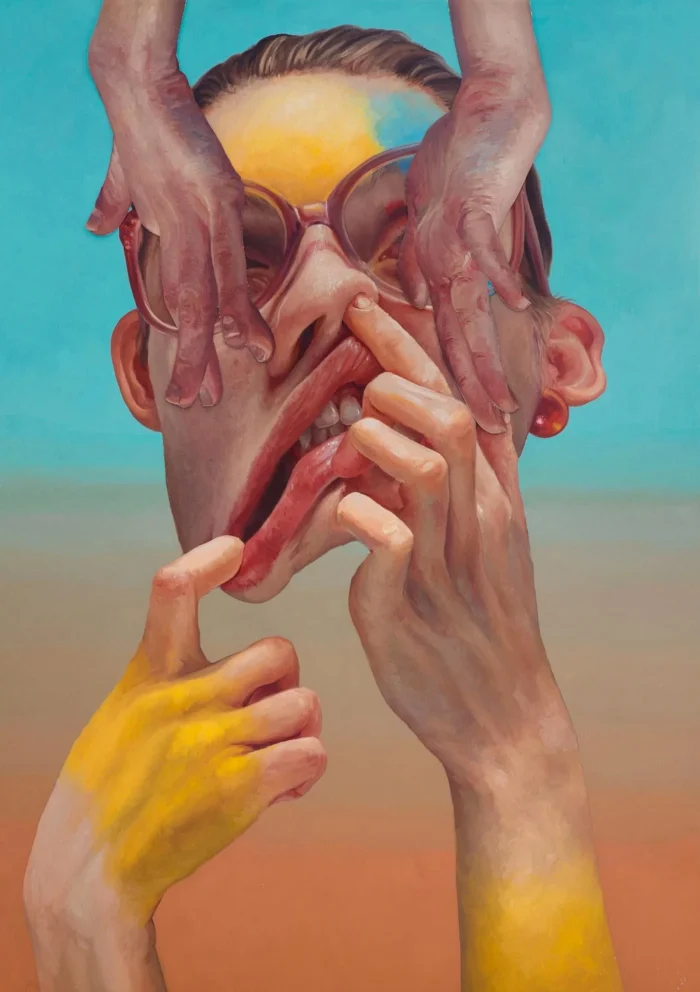
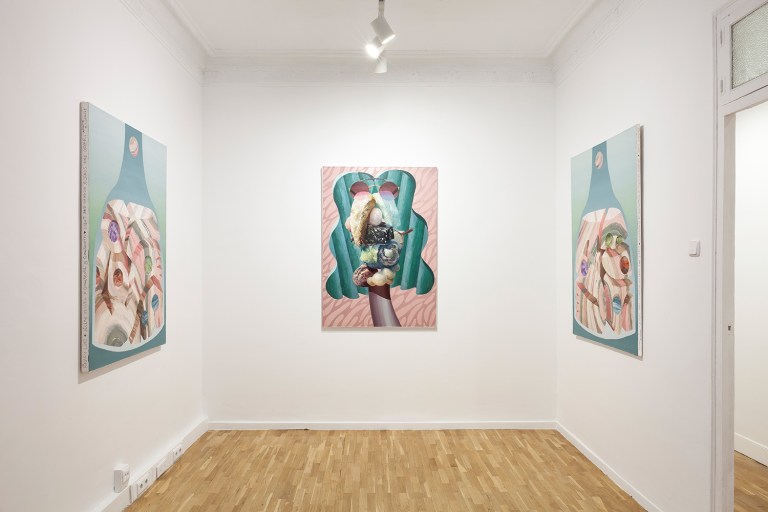
Vulnerability is the only bridge to make connection | Horacio Quiroz
2020 | 140 x 100 cm | Oil on canvas
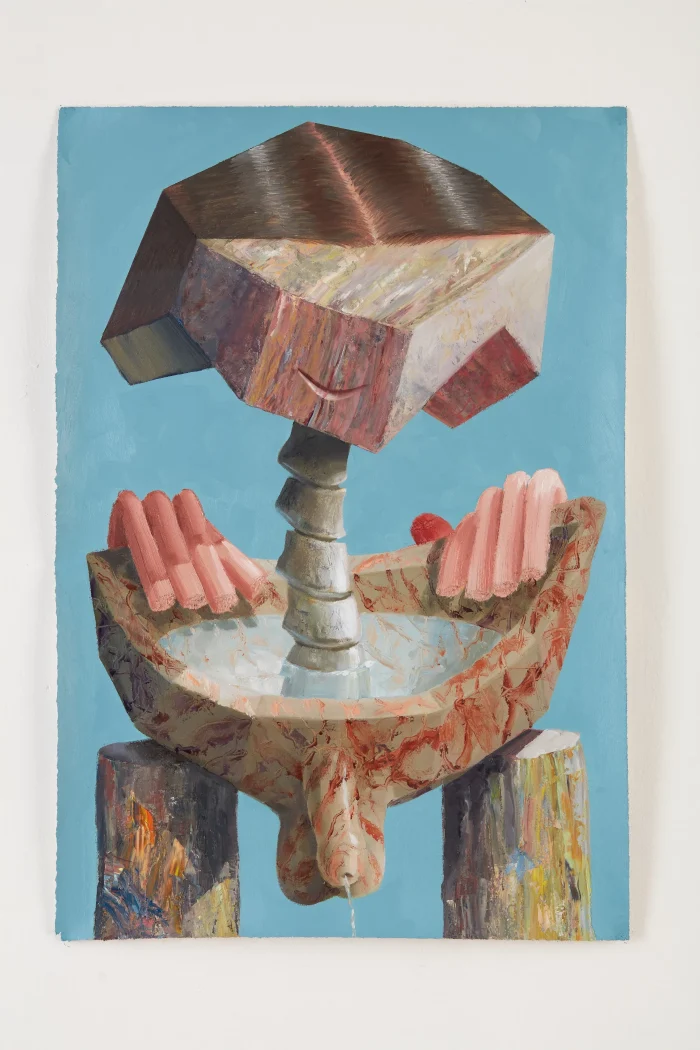
Ometeotl’s twerking | Horacio Quiroz
2023 | 140 x 100 cm | Oil on canvas
CURRENT EXHIBITION
INQUIRIES ABOUT THIS ARTIST
Contact us if you want to know more about this artist, get information about a specific piece, or view more of their available artworks.
PAST EXHIBITIONS
THE BODY, EXPLORED AS AN EMOTIONAL AND DUAL VESSEL
September 2025 - March 2026
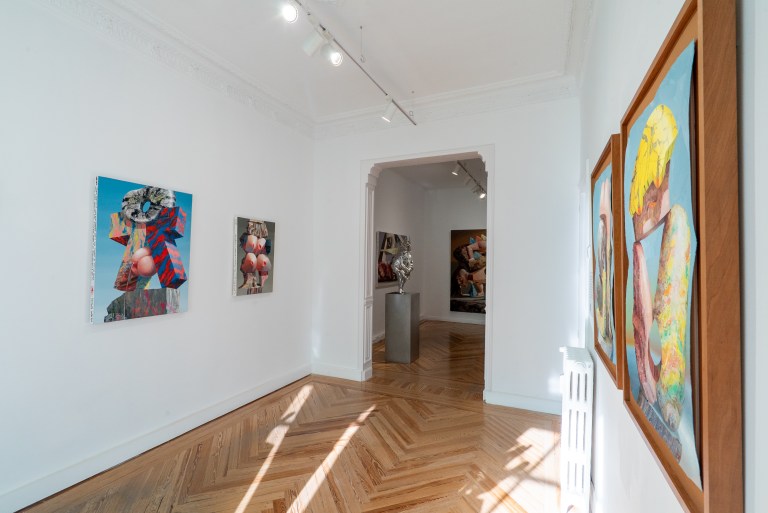
Horacio Quiroz reimagines the body as an emotional and symbolic landscape—fragmented, mutable, and resilient. Drawing from his series Goddesses of Spoiled Lands and En Escombros Monolíticos, the artist weaves anatomy, myth, and queer identity into hybrid figures that challenge traditional ideals of beauty and form.
Stones, skin, and ruins coexist in these works as vestiges of trauma, memory, and desire. Through a sculptural approach to painting, Quiroz elevates the incomplete and the wounded, offering a vision of the body as both archive and altar—imperfect, sacred, and always in transformation.
In Medusa’s Retina, Horacio Quiroz fuses mythology, queerness, and material experimentation to explore the body as a site of transformation and resistance. Drawing from pre-Hispanic and Western archetypes, his paintings reinterpret figures like Medusa or Ometéotl through richly layered compositions that oscillate between the visceral and the sacred. With a practice grounded in “anti-painting” — where accidental textures and discarded gestures take center stage — Quiroz builds a visual language that challenges binaries and offers new readings of identity, divinity, and matter itself.
ENEAS was a one-night collective exhibition curated by Saisho in collaboration with Eneaverso.
Held in Madrid, it brought together 21 contemporary artists and over 600 guests—including collectors, curators, and critics—in a multisensory journey through eight levels of artistic experimentation: from composition and material to light, texture, and technique. Inspired by the myth of Aeneas and structured around curatorial criteria rather than trends, ENEAS marked a new approach to experiencing and valuing contemporary art.