WILD PAINTING
Xavi Ceerre
DATES & LOCATION
September 2024 – March 2025
S Gallery Madrid
c/ Ferraz 78, 28008 Madrid
ABOUT THE EXHIBITION
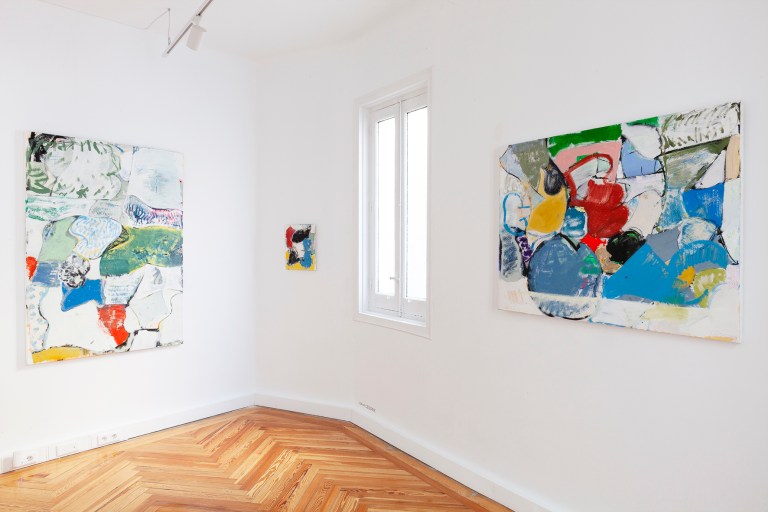
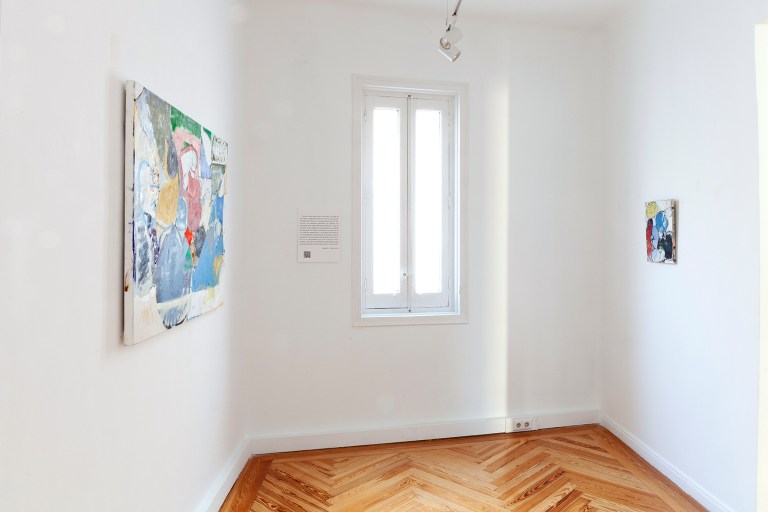
This exhibition is an explosion of expressive freedom, where graffiti, childhood memory, and musical improvisation converge on canvas.
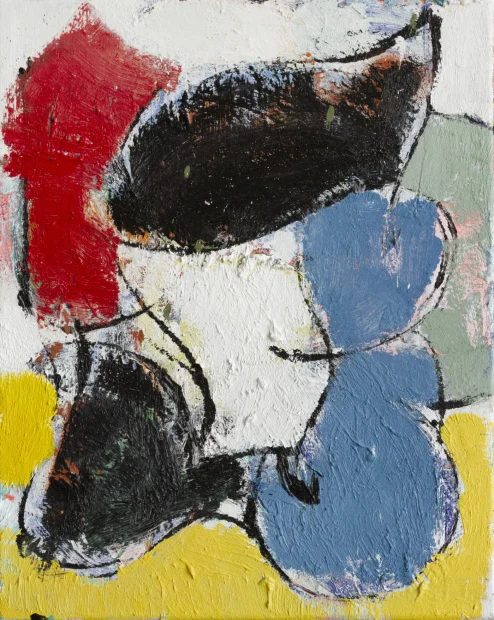
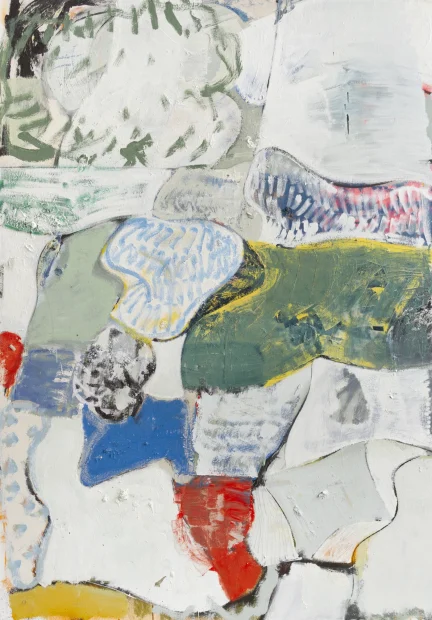
Drawing on urban art traditions, abstract expressionism, and the raw spontaneity of childhood drawing, Ceerre builds a visual language that is both playful and radical. His paintings —dynamic, textured, and often monumental— channel the rhythm of the street and the energy of electronic music into compositions that feel as much lived as they are painted.
FEATURED ARTWORKS

ABOUT THE ARTIST
XAVI CEERRE
Barcelona-based Xavi Ceerre draws from urban art and human universality, blending graffiti, abstraction, and primitive symbols into colorful, naïve paintings that reflect a raw, pre-cultural beauty rooted in instinct and impulse.
CURATORS' COMMENTARY
The Wild Painting of Xavi Ceerre
by Miguel Cereceda
Somo, 2024
Xavi Ceerre’s work lies at the crossroads of urban art, children’s painting, contemporary music, and freedom of expression. His work is not only a reflection of his personal and theoretical experiences, but also an amalgam of historical and contemporary influences that help understand the field of his production.
Educated in illustration and graphic design, he completed a master’s in painting at the University of the Basque Country and has worked extensively on applied arts on walls. Hence his special interest in graffiti and street art in general. The artist himself explains:
“My interest in graffiti has to do with a much more complex process of identity construction and appropriation of public space. For this reason, I find approaches such as post-vandalism, Intermural Art, graffiti removal, or post-graffiti interesting. However, I believe your use of the term urban art is much broader and encompasses all manifestations that occur in the public spaces of the city, including those from times before the emergence of hip-hop, which are of great interest to me.“
Indeed. Urban art has evolved significantly since its earliest manifestations on the walls of cities. While graffiti from Pompeii has been documented, this artistic practice’s entry into art history is much later. Photographer Brassaï, one of the pioneers in documenting graffiti, published an article titled “Du mur des cavernes au mur d’usine” in the magazine Minotaure in 1933, illustrated with wonderful black-and-white photographs of Parisian graffiti. This publication marked the beginning of his collaboration with the Surrealist movement, and his series of photographs titled Graffiti, shot between 1933 and 1960 on the streets of Paris, became a fundamental reference for the study of urban art.
Following this tradition, American photographer Martha Cooper documented New York’s vibrant graffiti scene in the 70s and 80s, capturing the essence of a rapidly expanding movement. Artists like Jean-Michel Basquiat and Keith Haring became icons of street art, bringing their work from the streets to galleries and museums worldwide.
The Revelation of Children’s Drawing
For Xavi Ceerre, these influences are crucial to the theoretical justification of his work. His interest in the evolution and development of children’s painting, studied by educators like Antonio Machón (Los dibujos de los niños, Cátedra, Madrid, 2009), Rhoda Kellogg, or graffiti historians like Fernando Figueroa, allows him to better understand his own creative process. In his work, Ceerre incorporates elements of innocence and violence, an explosion of color, and the enjoyment of freedom, reflecting the duality and complexity of an art that no longer likes to be called “urban.”
The experience of children’s drawing has been decisive for Ceerre. In a folder of drawings he made between the ages of two and four, he discovered a series of school worksheets where he had to complete drawings without going outside the lines or perform very restrictive exercises, from an artistic perspective. However, on the back of these sheets, he found free-themed drawings that tended toward abstraction and seemed to show circuits and maps. These drawings revealed the innate creative genius that we all possess, and for Ceerre, they were a revelation.
Among the artists who influence his work, Ceerre cites Arshile Gorky and Willem de Kooning, whose work reflects an expressive freedom and emotional intensity that he seeks to incorporate into his own production. He also acknowledges a certain influence from Antoni Tàpies’ painting, especially in his series titled “The Language of the Walls,” where texture and surface treatment of the canvas play a crucial role.
Ceerre constructs his paintings with great expressive freedom, starting with drawings that he then attacks with patches of color. The surface of the canvas is treated with various techniques, from frottage and grattage to the use of spray paint, recalling the freedom of creation in urban painting. He works in different formats, but where his expressive freedom manifests most fully is in large canvases and on large sheets of paper.
The Influence of Music
The relationship between music and painting is another fundamental aspect of Ceerre’s work. Poet and saxophonist Mariano Peyrou Freitas has brilliantly studied the creative process in music, particularly in relation to free jazz creation. His critique of the intellectual construction of music has influenced Xavi’s conviction that it is also possible to learn painting through music. Ceerre is drawn to hip-hop and electronic music, and the techniques of sampling, mixing, and post-production in music, as well as cut-out, the cut-and-paste technique characteristic of DJs, are also reflected in his creative process. In a way, it is true that his painting is also a sampling of images.
Hip-hop, with its culture of graffiti and breakdancing, not only provides a soundtrack to his work but also influences his visual aesthetic. Reading Mariano Peyrou’s interpretation of John Coltrane’s Giant Steps, he came to the conviction that it might be possible to construct mandalas based on a circle of fifths. The energy and rhythm of the music thus translate into the shapes and colors he uses, creating a synergy between the visual and auditory senses. Electronic music, with its repetitive rhythms and layers of sound, is reflected in the techniques of layering and mixing that he uses on his canvases.
Ceerre sees music and painting as interconnected disciplines that feed off each other. Improvisation in jazz and freedom of expression in hip-hop find an echo in his artistic approach, where every stroke and every splash of color is a note in a visual composition that challenges conventions.
An Art That Challenges Boundaries
Xavi Ceerre’s work is a testament to art’s ability to transcend boundaries and explore new forms of expression. His combination of influences from the tradition of urban art, children’s drawing, and music creates a unique visual experience that challenges expectations and redefines the scope of contemporary art.
Ceerre not only borrows techniques and styles from his predecessors, but also transforms and adapts them to his personal vision. His work is a continuous exploration of freedom and creativity, a journey that takes him from the city walls to the confines of experimentation.
In his large canvases, Ceerre manages to capture the essence of movement and energy that characterizes city life, street culture, popular art, urban artistic expressions, spontaneous art, public space interventions, and the collective subconscious… His works are a whirlwind of colors and shapes, a controlled chaos that reflects the vibrant life of the streets and the freedom of the human spirit. Innocence and violence coexist in his paintings, creating a tension that both attracts and challenges the viewer.
Xavi Ceerre’s wild painting reflects his personal and artistic journey. His work is a celebration of creative freedom and a testament to art’s power to transform and redefine reality.
Ceerre invites us to see the world through his eyes, to experience the same sense of discovery and wonder he felt when he found his childhood drawings. His work reminds us that we all carry a creative genius within ourselves, a spark of creativity waiting to be unleashed.
Ultimately, his painting is a journey of exploration and self-discovery, a constant search for new forms of expression and new ways of seeing the world. It is a reminder that art has no limits and that true creativity emerges when we allow ourselves to be free and authentic.