#WEAREALLGOINGTODIE
Óscar Seco
DATES & LOCATION
September 2024 – March 2025
S Gallery Madrid
c/ Ferraz 78, 28008 Madrid
ABOUT THE EXHIBITION
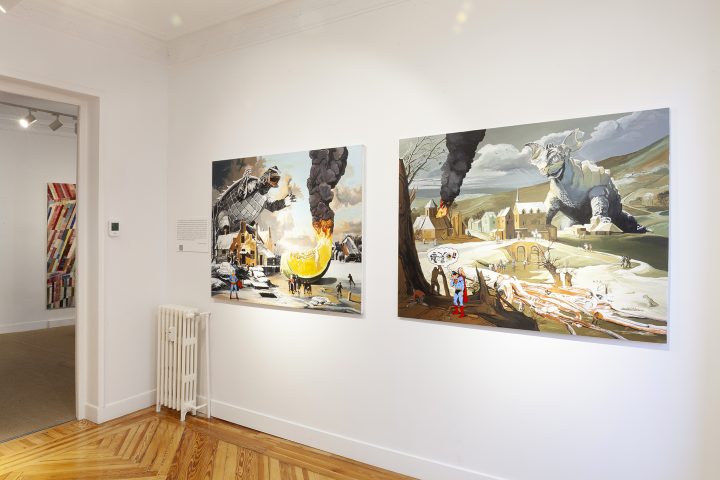
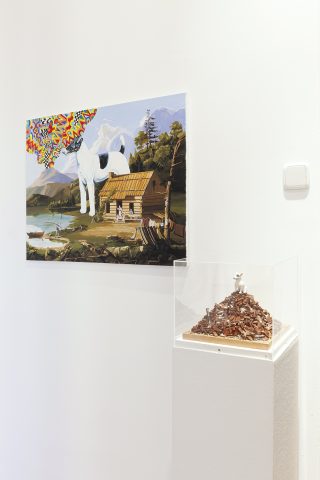
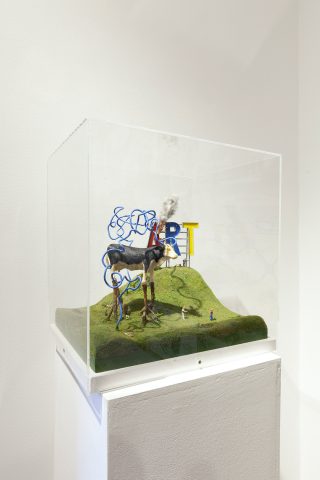
In #weareallgoingtodie, Óscar Seco embraces irony, pop culture, and cognitive estrangement to construct a visual world where baroque painting, movie monsters, comic heroes, and historical imagery collide without hierarchy. Through appropriation and playful recombination, his works blur fiction and critique, inviting viewers into a chaotic yet deliberate mosaic of references. With subversive wit and a dynamic, electric language, Seco reclaims the painted surface as a space for imaginative resistance—one that defies monotony in an age of image overload.


FEATURED ARTWORKS

ABOUT THE ARTIST
ÓSCAR SECO
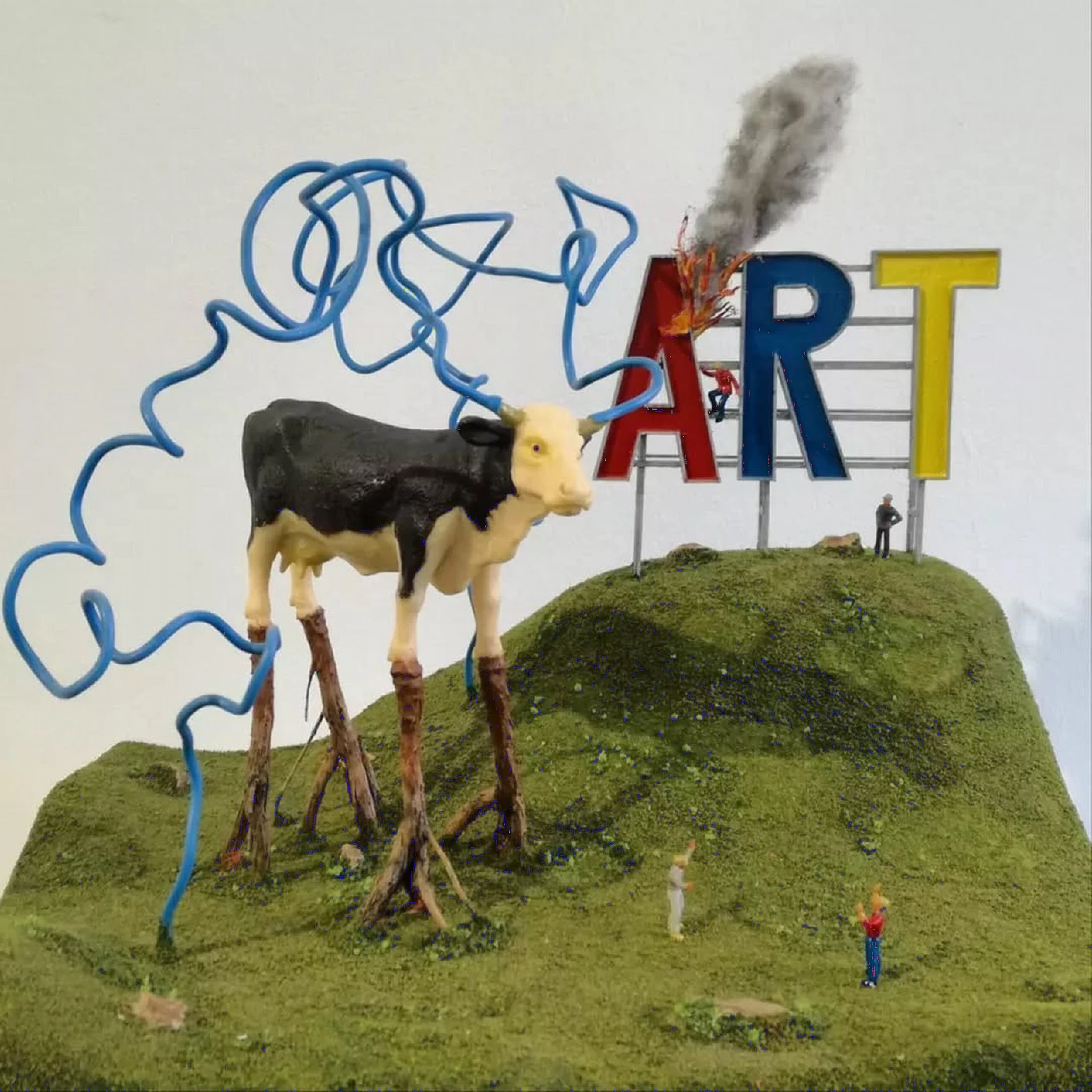
Óscar Seco’s dense, ironic compositions mix historical references with comic aesthetics and dystopian imagery. His critical painting practice challenges political and cultural narratives through symbolism and parody.
CURATORS' COMMENTARY
We Are All Going To Die by Óscar Seco
by Óscar Manrique
Irony can be a transgressive accomplice to art. In many ways, it is what sparks a touch of grace within the canonical world of painting and the dense visuality to which we are subjected.
#weareallgoingtodie showcases a series of works by Óscar Seco, where humor and appropriation become fundamental elements of a game we are all invited to play.
His well-known defense of the trivial and the consideration of the “unimportant” as a political stance against the thematization of art creates an ambiguous and disconcerting space in his canvases, a mosaic of fictions without hierarchies that reflects a culture without creative limits.
In this space, baroque paintings, war photographs, comic book superheroes, movie monsters, and numerous creatures that have already become part of a personal and powerful iconography coexist. In this way, with the subtle grace of a demiurge accustomed to play, Seco appropriates these images and combines them with other signs to generate a wide variety of meanings, creating new metaphors and partially nullifying the borrowed reference. These “borrowings” lose their hermetic character by becoming playful elements, abandoning any illusion of fictional reality or social nostalgia. They simply become part of a painted surface that amalgamates various experiences, both everyday and symbolic or artistic.
The energy that flows through all his compositions is the result of an electric language that embraces all these influences and evokes the most prominent strategies of pop art from the 1960s, similar to figures like Richard Hamilton or Roy Lichtenstein, who continuously maintained a fresh and updated language. Seco thus approaches the contemporary universe from a subversive perspective; an analytical approach to artistic systems that seeks to examine the representation of the creator in today’s society, visualizing him as a driving agent of promotional strategies, fully integrated into the mechanisms of our visual culture.
However, what prevails in this amalgam is its baroque and personal expression, beyond its media origin, as its semantic codes dive into the interaction and mixing of all those sources, without neglecting the power of symbols. Through this practice, connections and narratives emerge to provide depth to ambiguity, layers of meaning that are very diverse and dissimilar, which, behind a veil of deceptive spontaneity, hide a careful selection of images drawn from his heterogeneous visual consumption, without the artist feeling the need to justify the criteria behind his choices. This is a process that 20th-century Russian literature defined as cognitive estrangement, or in other words, the creation of scenarios that aim to provide a fictional chronicle of our society by using familiar ideas that, when decontextualized, become strange, inviting the viewer to dive into a mutant world.
Anyone who insists that it is necessary to understand the plot or narrative line from the beginning has already lost this battle, for Seco’s ideas are constantly in motion, saturated with cultural references and logics that seem to zigzag back and forth. His territory is one of fun, and to win the battle, one must be aware that we are treading on fiction within fiction.
In a schizophrenic generation like today’s, overwhelmed by the constant bombardment of mass-media images, we must be able to find paths that return us to the unpredictable space of the unreal and the dream.
Painting today must contend with this “screenocracy”; it must fight its own battle against monotony, and, for this reason, the most fascinating aspect of Óscar Seco’s painting is its plastic vitality and its ability to stimulate the imagination. A painting that never bores, despite the imminent catastrophe of “there is nothing left for us to see.”