THE RETURN OF MICHAEL BURTON JR.
José Luis Serzo
DATES & LOCATION
September 2024 – March 2025
S Gallery Madrid
c/ Ferraz 78, 28008 Madrid
ABOUT THE EXHIBITION
José Luis Serzo crafts a vivid theatrical universe in The Return of Michael Burton Junior, blending romantic landscapes, Dadaist echoes, and personal mythology into a multilayered narrative of fiction and introspection. Irony, allegory, and a baroque excess converge in this expansive visual tale—part painting, part installation, part dream—where the artist resurrects an alter ego to question identity, history, and the politics of storytelling. Serzo’s work operates as an “oracular theater,” inviting viewers into an imagined world where darkness becomes a fertile ground for reinvention, and the artifice of fiction reveals deeper truths.
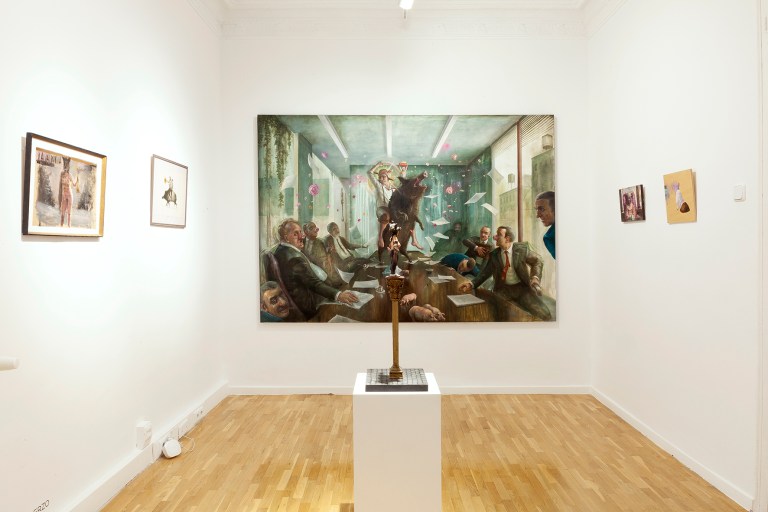
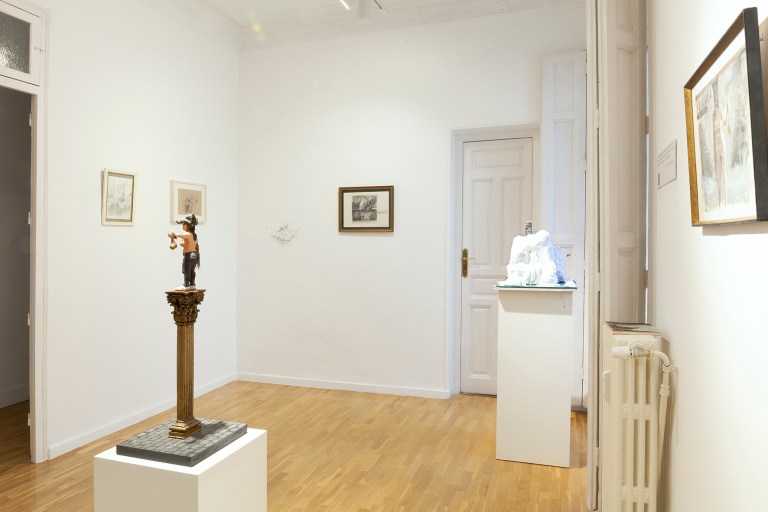

FEATURED ARTWORKS


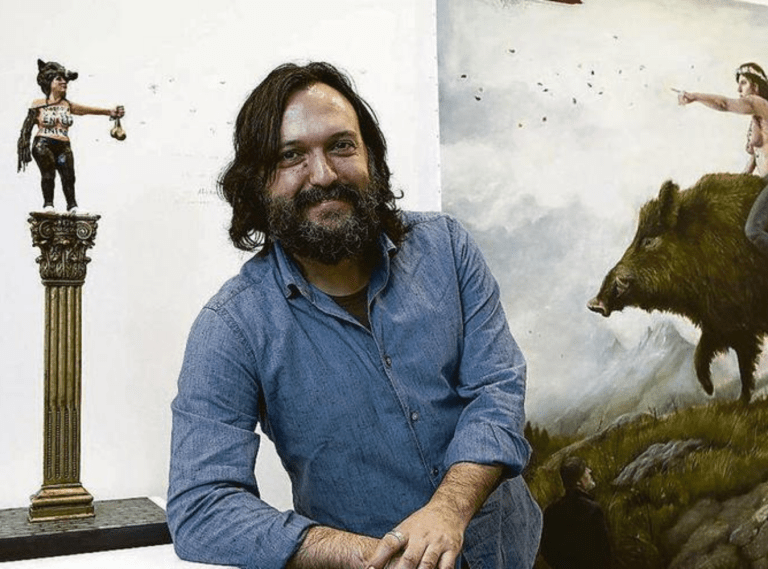
ABOUT THE ARTIST
JOSÉ LUIS SERZO
José Luis Serzo weaves theatrical, figurative narratives that combine painting, literature, and installation. His highly symbolic universe reflects on identity, mythology, and the duality between fiction and reality.
CURATORS' COMMENTARY
“José Luis Serzo (Albacete 1977) is figure with one of most distinctive personalities of his generation, recognized as a pioneer in the use of various narrative strategies and stylistic references widely embraced by younger generations. His uninhibited interest in illustration, for example, or the use of storytelling as a way to structure content planes, the genealogical and organic development of his thematic cycles, as well as the vindication of fictional autobiography as a way of political engagement, even within his fervent use of fantasy, private mythology, or utopian social, family, and interpersonal models, initially led him to be seen as a ‘rara avis’ by his contemporaries, but enthusiastically followed by artists of the generations that came after him.”
— Oscar Alonso Molina
Catálogo XIII Bienal Martínez Guerricabeitia. 2015
“Serzo is one of the most powerful and personal voices of current figuration. The work that emerges from Serzo’s den shoots off in many directions, reconciling vastly different elements such as romantic landscapes, installations, and an irrepressible passion, especially present in the work that prompts these lines, for the old avant-garde movements, more specifically Dadaism and Constructivism, which are added to his already rich imaginary museum.”
— Juan Manuel Bonet
Catálogo J.L. Serzo ARCHIMÉTRICA
Edited por CAB de Burgos. 2020
“Know this: Serzo’s work offers another way of seeing, the perspective of someone furiously marching toward the abyss of light, scattering scenes in the darkness as he goes, dispersed here and there. But it’s also theater and allegory, games, ‘gigantic humor,’ temptations, fears and desires, phasmas, apparitions or dreams (‘which are’) artifices upon artifices upon artifices. Like an oracular preacher of painting, aware that darkness is the true place where history can be rewritten and time can be revoked, as if attempting a perpetual renaissance, Serzo seems conscious that the truth of art lies in the supreme exercise of artifice.”
— Alfonso de la Torre
Catálogo J.L.Serzo Las tentaciones de Courbet
Sala Robayera 2022
“Among the representatives of expanded baroqueness, José Luis Serzo overwhelms the senses through a brilliantly inscribed accumulation of voices and presences.” “…the dark dominance of the night saturates Serzo’s existential visions with sublime twilight. We anticipate, even now, that in the intense—and consequently already extensive and numerous—career of José Luis Serzo, the same unchanging stratification of abundant and vigorous pictorial arguments has informed the sublime saturation of all his stages.”
— Antonio García Berrío
Revista de Occidente
Nº393. Febrero 2014
“Irony is the fundamental ingredient in the painting and installations of José Luis Serzo (1977), an artist from Albacete who studied in Madrid at the Complutense University’s Faculty of Fine Arts. Serzo has appropriated academic painting, baroque rhetoric, sublime emphasis, dramatic figuration, sarcasm, and irony—what to say about Rothko in Space (2003), a painting in which the American master is depicted legless, with his legs replaced by sticks or stilts? What freedom of transcendence and, at the same time, what greater respect and recognition? (…)”
— Valeriano Bozal
History of Painting and Scuplture of the 20th Century in Spain II – 1940-2010
Ed. Machado Libros. 2013