10 YEARS. 10 ARTISTS. 10 STORIES.
Ikella Alonso
DATES & LOCATION
September 2026 – October 2026
S Gallery Madrid
c/ Ferraz 78, 28008 Madrid
ABOUT THE EXHIBITION
Ikella Alonso’s painting revisits art history as a living field of interpretation. Drawing from masters such as Fra Angelico, Giotto, Michelangelo, Pontormo, and Georges de La Tour, the exhibition reimagines historical images of mourning through a contemporary lens.
By incorporating aerial maps of each artist’s place of origin into the structure of his compositions, Alonso turns the genius loci into an active pictorial force. The result is a body of work where memory, territory, and painting’s own legacy converge in a renewed dialogue with the past.
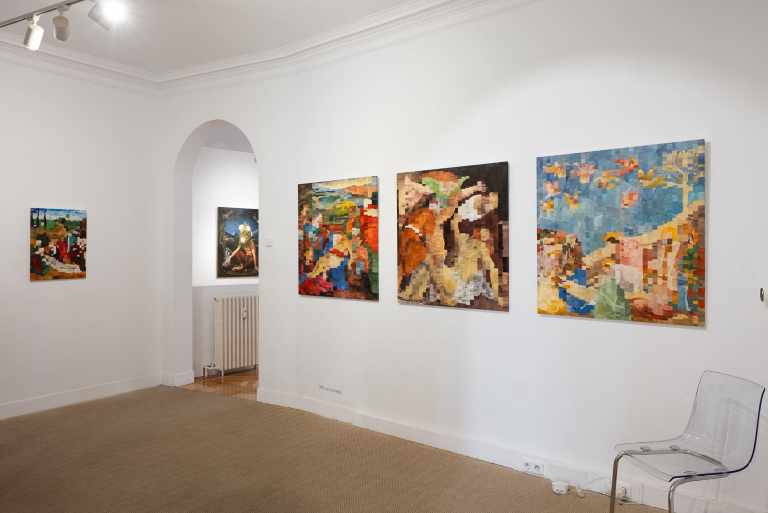
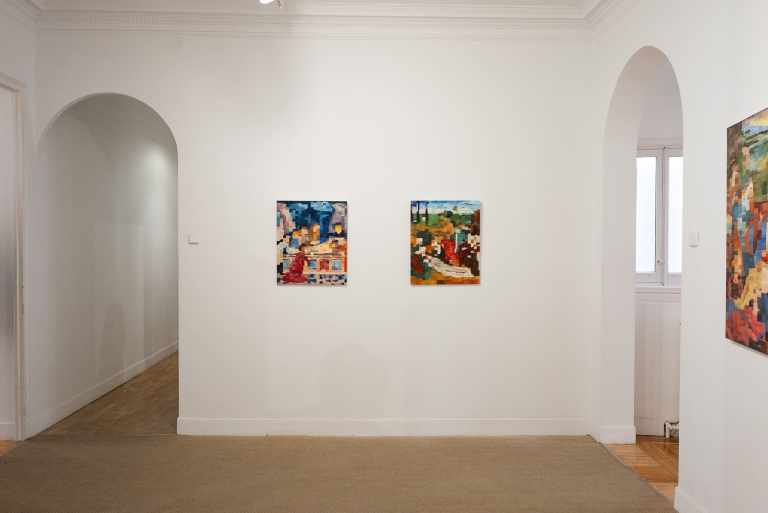
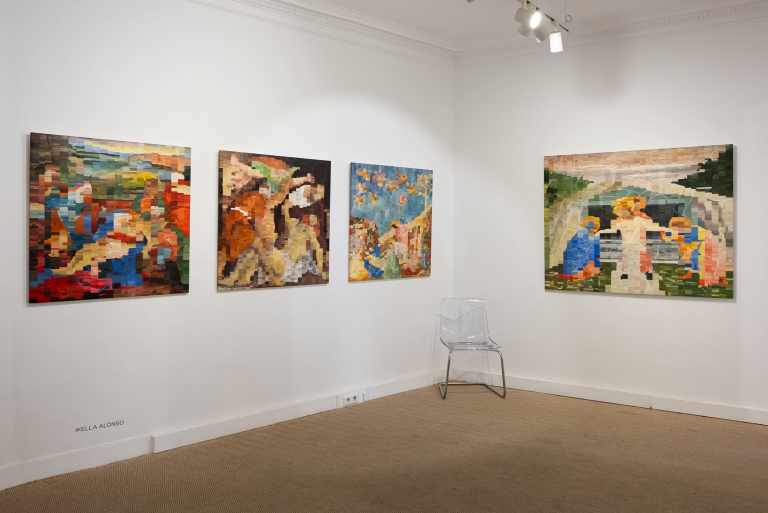
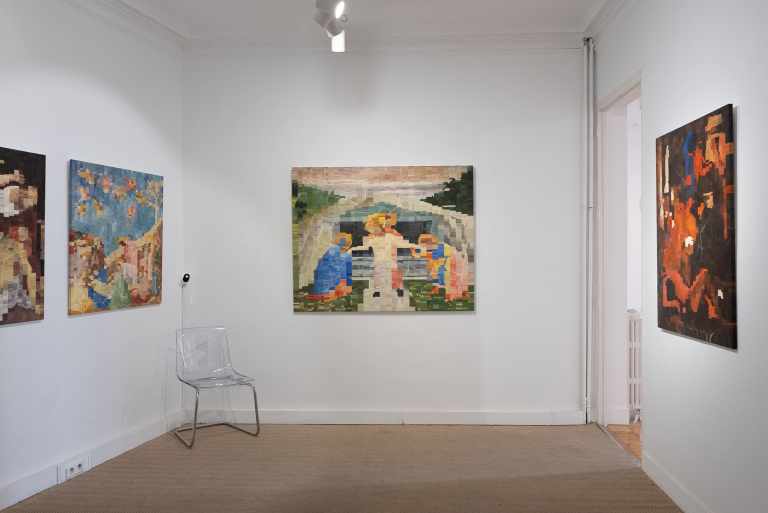
FEATURED ARTWORKS


ABOUT THE ARTIST
IKELLA ALONSO
Madrid-based artist whose work merges aerial cartography and art history. Through vibrant, textured homages to masters like Van Gogh and Mondrian, he reimagines painting as a dialogue between geography, memory, and modern abstraction.
CURATORS' COMMENTARY
Painting, History, and the Genius Loci
by Carlos Jiménez
2026
Ikella Alonso is a painter who appeals as much to the eye as to the mind. His painting satisfies our inevitable scopophilia, encourages us to unleash our imagination, and invites us to interpret it. That is what I intend to do here, offering an interpretation of his work as that of a painter’s painter, a painter who paints above all for other painters, fully aware that history has forged an immeasurable legacy encompassing both a craft and a profound body of knowledge, as well as a repertoire of motifs and tropes to which one may return again and again. It is a legacy that can only be rescued from oblivion or abandonment by reinventing it.
The works in this exhibition are compelling evidence of how stimulating and fruitful it is to paint painting anew. To transform every established solution into a problem that demands unprecedented answers. This is precisely what Ikella Alonso has done with these paintings: paintings created from other paintings. Paintings inspired by an undeniably remarkable roster of artists, including Fra Angelico, Giotto, Michelangelo, Geertgen tot Sint Jans, and Georges de La Tour, among many others of equal distinction. The works were selected according to a single theme—or rather, the emotional impact of a photograph: that of a mother carrying the body of her son through a field of ruins. It is the kind of image that moves us all, and one that brought back to Alonso’s memory countless paintings that have sublimated the grief of every mother mourning the death of her child through representations of the Virgin lamenting the death of Jesus Christ. Every painting in this series by Ikella Alonso takes the body of Christ as its interpretive model, with the sole exception of the work inspired by La Tour, whose subject is the body of Saint Sebastian.
Among the paintings that have served as models for Ikella Alonso, I have paid particular attention to The Deposition by Pontormo, part of the ensemble he painted for the Capponi Chapel in the Church of Santa Felicita in Florence. This is due both to its extraordinary quality and to the fact that it is one of the masterpieces of Mannerism. I believe that Achille Bonito Oliva’s interpretation of Mannerism in his book L’ideologia del traditore. Arte, maniera e manierismo helps clarify how and why Alonso paints. In that work, Bonito Oliva reclaims Mannerism in order to reclaim painting itself, at a moment when many considered it dead. He champions a form of painting capable of breaking with the modern canon and with the “Darwinism” characteristic of the artistic avant-gardes. He rejects the idea of valuing novelty for its own sake and its inevitable corollary: that each new avant-garde movement is, by definition, superior to the one before it. He further proposed that painting turn its gaze back to the past, reassess its own history, and recover the freedom to quote and draw inspiration from the masters of earlier times. Finally, he argued that painting should restore its dialogue with the genius loci, the unique spirit of the place from which it is created—a dialogue broken by the unrestricted universalism canonized by modernity.
The relationship with the genius loci is undoubtedly one of the keys to Ikella Alonso’s painting. To create the works in this exhibition, he took an aerial map of each of the regions where the painters he selected were born, reduced each map to a schematic pattern, and used those patterns to organize the distribution of forms and colors across the canvas. For him, the genius loci is neither omitted nor merely quoted: it is absorbed into the work itself.