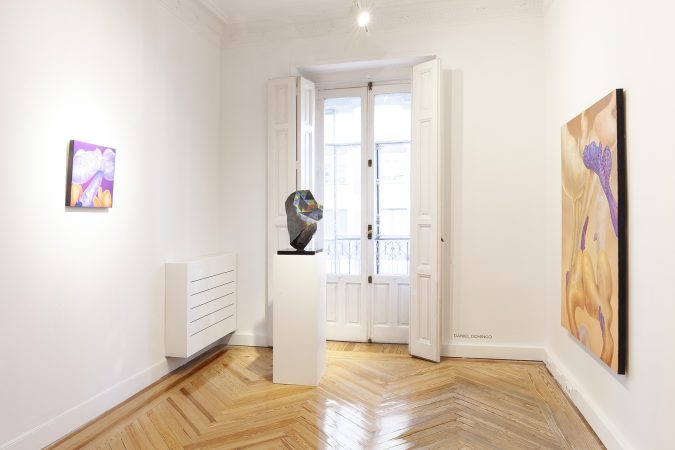
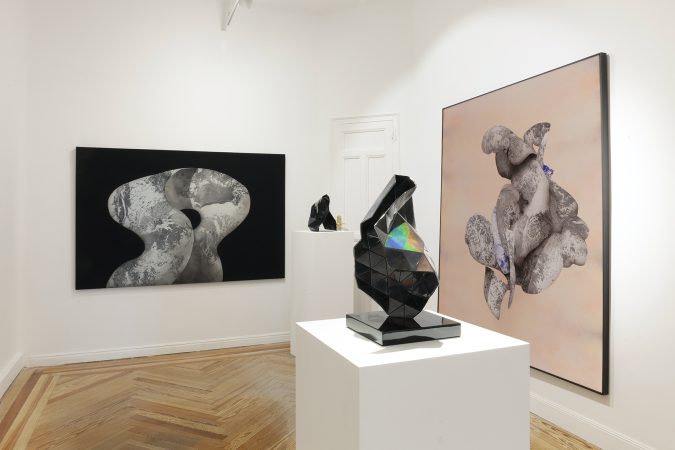
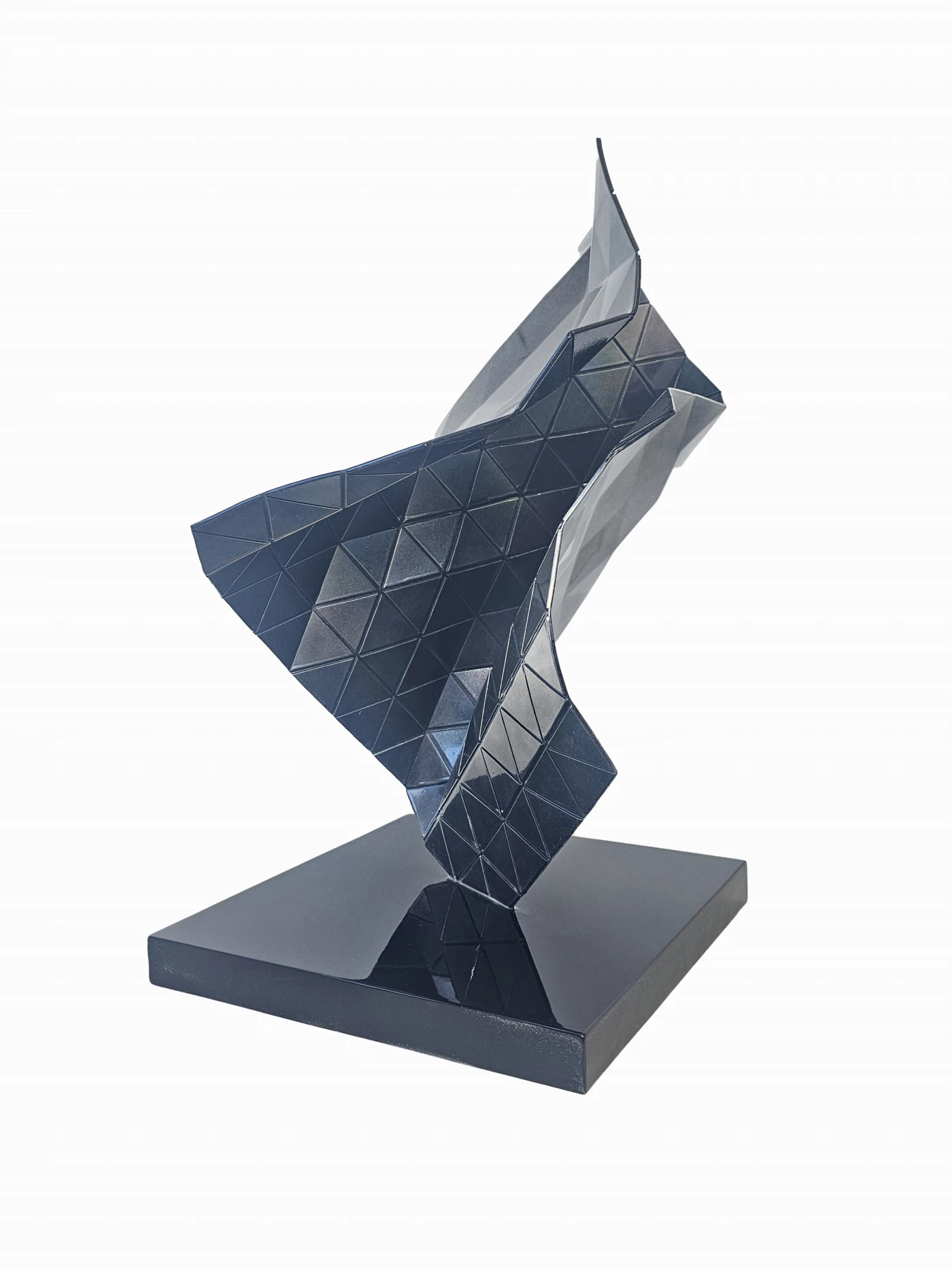
In Visible Spectrum, Daniel Domingo Schweitzer transforms light, geometry, and movement into a device for sensory reflection. Using holographic paint on origami-inspired aluminum structures, the works shift with the viewer’s gaze—turning stillness into illusion and motion into spatial awareness. Rather than static sculptures, these pieces exist only through perception, inviting us to question how space is lived, seen, and felt.
FEATURED ARTWORKS
Espectro visible (objeto XIV)
Espectro visible (objeto XV)
ABOUT THE ARTIST
DANIEL DOMINGO SCHWEITZER
Daniel Domingo Schweitzer creates sculptural and spatial explorations rooted in geometry and materiality. His installations challenge viewers’ perception of space through form, tension, and physical presence.
Visible Spectrum is a device that uses geometry, light, and the viewer’s movement as a means to reflect on the mechanisms involved in the construction of lived space. I want to invite the viewer to reflect on the construction of their own sensory space, placing experience at the center and forefront.
The works are inspired by origami structures applied on an aluminum plate. The finish is done with holographic paint, which breaks down light into its visible spectrum. This causes the viewer to perceive geometry and light differently, depending on their point of view and movement.
Space, as such, is neither tangible nor visible. To perceive and understand it, it must be endowed with physical and sensory limits. Space encompasses us and is part of our daily experience, but when conceptualized, it becomes something very abstract.
Visible Spectrum seeks to make the invisible visible. I want to give space a physical, cognitive, and reflective dimension. It is about enabling the viewer to become aware of their own sensory space.
If the viewer remains still, they will receive a fixed image. If they move, the light changes and transforms the object; the fixed image becomes volume, and spatiality is constructed.
This depends on each individual’s sensory perception. Each viewer may be looking at the same element, but they will see and perceive something different. For this reason, I define these objects as devices rather than conventional sculptures. They are works that are activated by one’s gaze and exist solely in the experience.