THE EVOLUTION OF NARRATIVE FIGURATION
José Luis Serzo
DATES & LOCATION
September 2025 – March 2026
S Gallery Madrid
c/ Ferraz 78, 28008 Madrid
ABOUT THE EXHIBITION
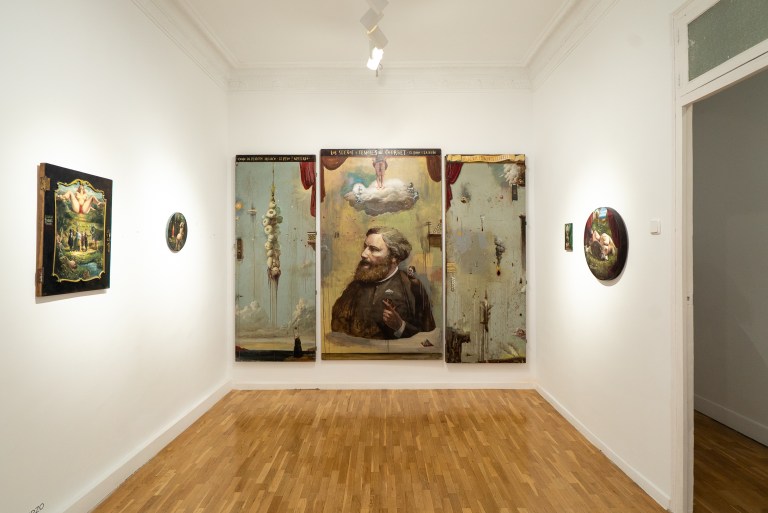
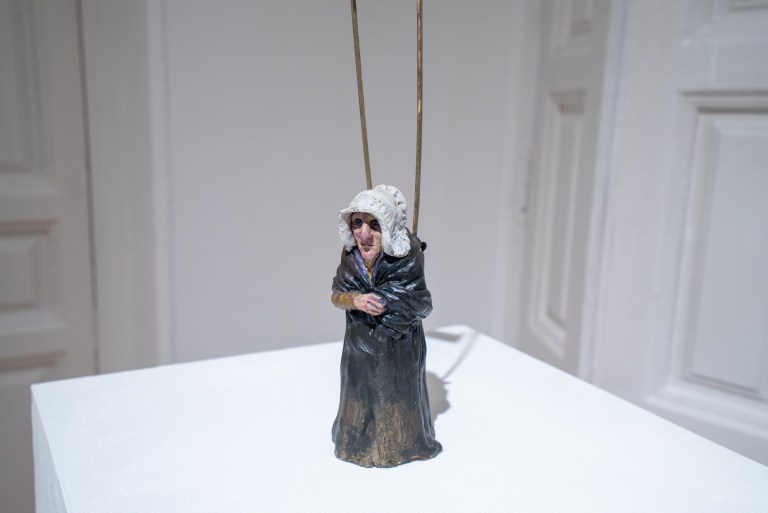
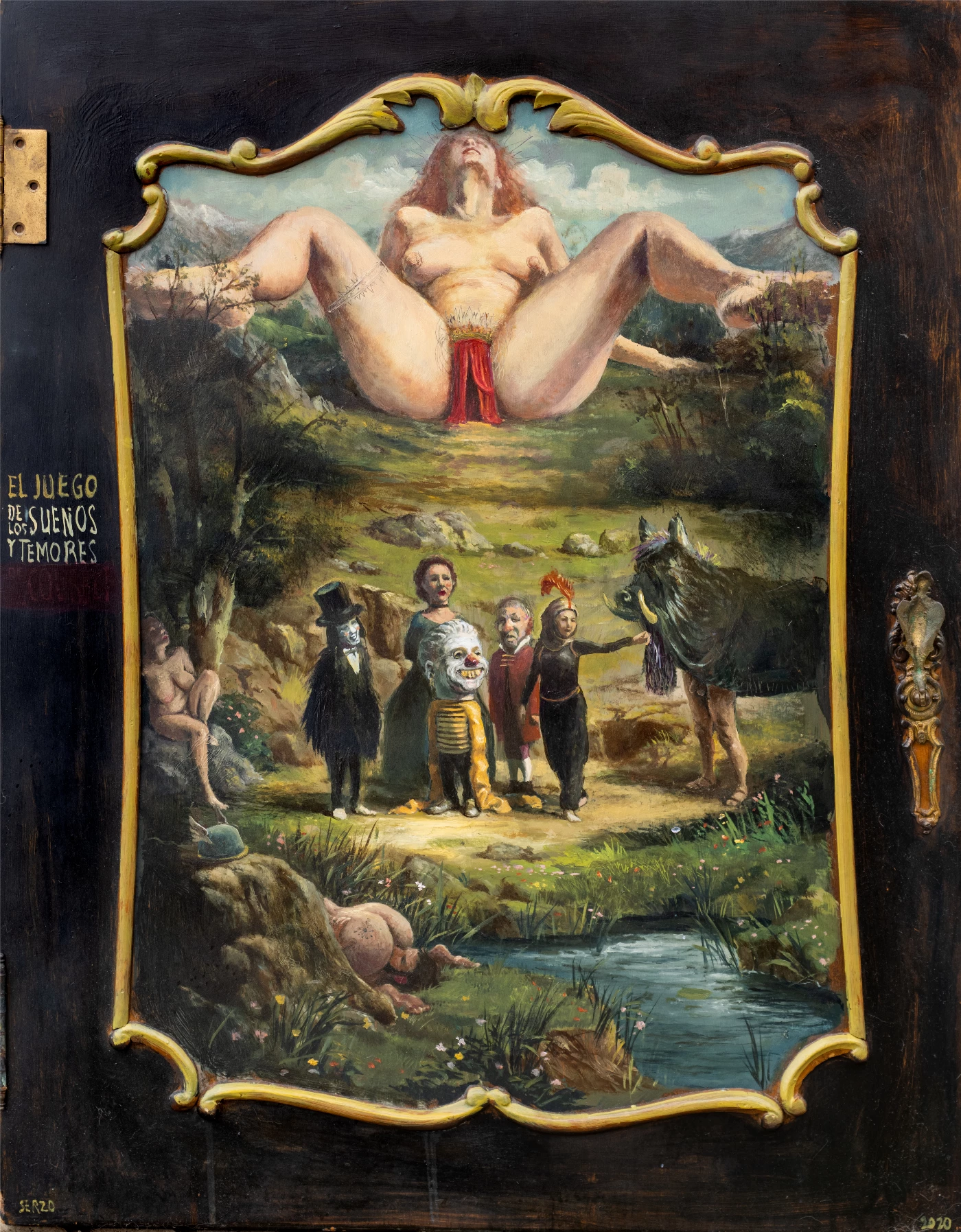
José Luis Serzo constructs theatrical worlds where fiction, memory, and identity collide. Blending painting, sculpture, and drawing, his work unfolds like visual allegories—baroque, ironic, and emotionally charged. Through layers of symbolism and invented characters, Serzo explores desire, contradiction, and the transformative power of narrative.

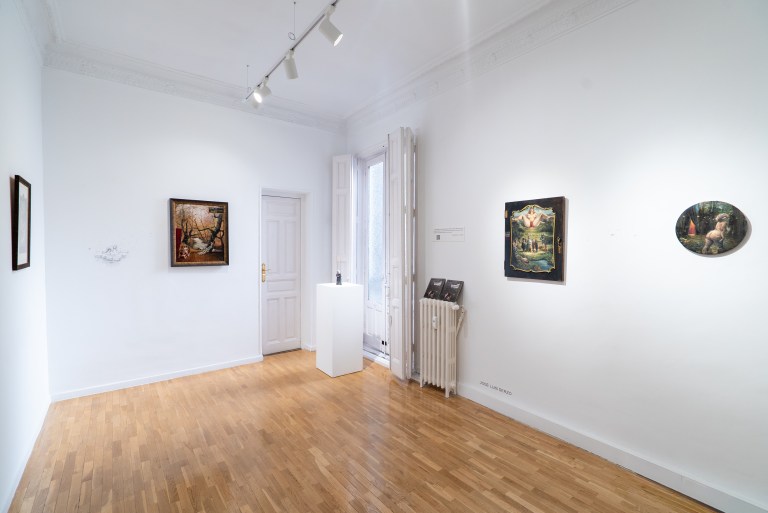
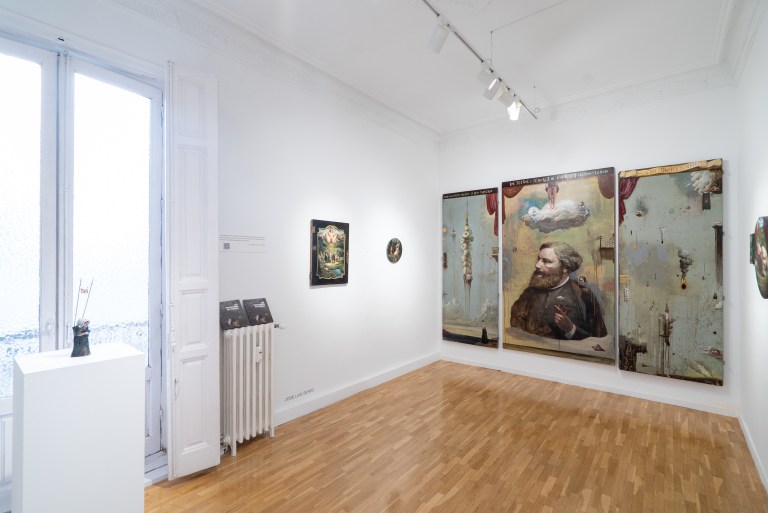

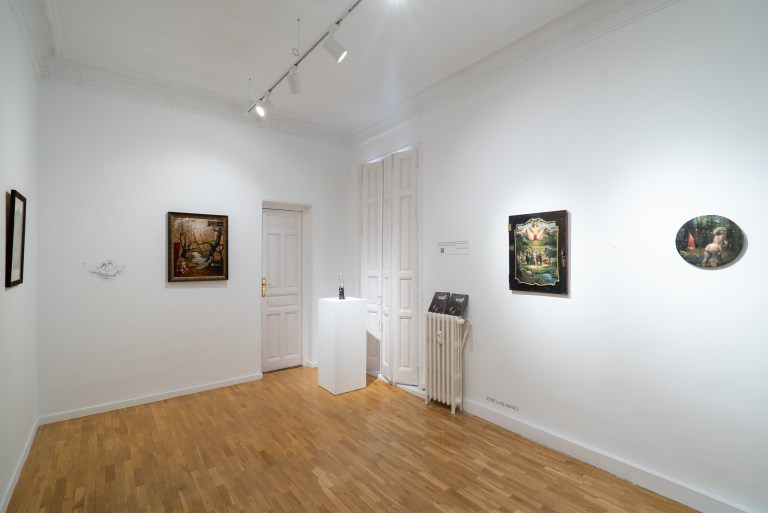
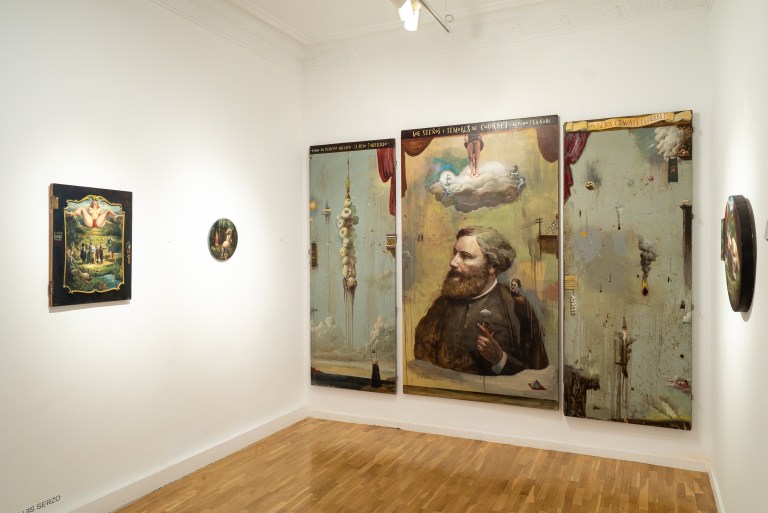


FEATURED ARTWORKS

ABOUT THE ARTIST
JOSÉ LUIS SERZO
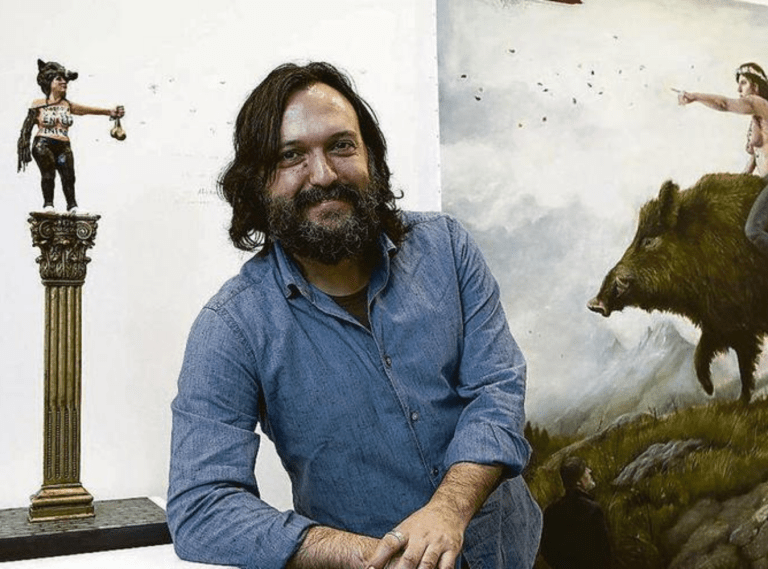
José Luis Serzo weaves theatrical, figurative narratives that combine painting, literature, and installation. His highly symbolic universe reflects on identity, mythology, and the duality between fiction and reality.
CURATORS' COMMENTARY
JOSÉ LUIS SERZO: SUBLIME VIOLENCE
[REFLEXIONS ON THE CASE OF GUSTAVE SERZO]
by Alfonso de la Torre
Practicing an extreme and liberated way of thinking, José Luis Serzo (Albacete, 1977) emerges as a provocateur, a liberated painter who chooses to remain unaware of the possible benevolence of the future. In renouncing himself, it seems Serzo’s artistic story unfolds apart from this truth, expressing an extraordinary gift as a tragic painter who embraces the agonizing joy of wandering beyond the known. The flower of his anger grows wild, and he engages with painting as a limit experience, always in tension, pausing only to listen.
In the realm of excess, one finds Serzo’s body of work, echoing the tormented spirit of Courbet—”the most vigorous painter of the 19th century” per Marcel Zahar—and his “unequaled violence.” Fear, desire, pleasure, guilt, and the excess itself are the declared themes of Serzo’s reflection. A thinking, carnal painter, he sees painting as the ultimate act of embodiment, turning the void that dwells in our bodies into objects of desire. He defines himself as a painter of skins, sharing surfaces: of bodies, veils, canvases, drapes, or carpets.
Serzo transforms exhibition spaces into states of alertness. His paintings, drawings, sculptures, and assemblages—many site-specific—along with spatial interventions of his drawings, allow him to sustain an infinite dialogue with Courbet, an ars memorandi in a complex narrative that, though it belongs to another, becomes his own. He invokes the past like a crepuscular tide. Not only a Courbetian, Serzo also channels the spirits of Goya and a furious Millares. Gustave Serzo, as he sometimes calls himself, is accustomed to heteronymy, to transforming into different characters, to “feigned identities” and stories of constant rebirth. He becomes a psychic figure, as if capable of traveling through folds of time on a magic carpet that reappears here and there, in different guises, generation after generation.
Hermetic, alchemical, cabalistic, Baudelairean, mysterious—Serzo exists in a permanent trance, where the result is a voice that is both his and not his, a two-voiced dramaturgy. He practices estrangement, deviation, and dares the abyss. Painting and errancy converge as manifestations of someone determined to expose the darkness within our bodies, in search of a place where truth might emerge—even at the cost of perishing in such a titanic pursuit. There is no calm in Serzo’s painting: it is an avalanche of illuminative states. The artist (and we, the viewers) are possessed by the firestorm of images—a transmigration without end, exhausted by this journey to the edge.
His is a painting of immanence: of desire or its narration, of symbols and associations, of bodies agitated, exposed, revealed to exhaustion, nearly exalted—staggering images emerge. Mysticism becomes irrational, incendiary, Babel-like, revealing the essential artifice that painting requires. Serzo praises work and salvation through a painting practice of perpetual vigilance, releasing endless images through various techniques and abrupt, hard-to-explain forms. He demands we become accomplices in the quest for wonder and emancipation—the same demand Georges Bataille once made of art.
Serzo offers another way of seeing: the vision of one who furiously walks toward the abyss of light, scattering scenes in the dark along the way. Theater, allegory, gigantic humor, temptation, fear, desire, apparitions, dreams (which “are”)—artifice layered upon artifice. Like an oracular preacher of painting, he knows that darkness is the true place where history can be rewritten and time revoked. As if in pursuit of a perpetual rebirth, Serzo makes evident that the truth of art lies in the supreme exercise of artifice. This is exemplified in his 2022 piece En el humo de la pipa, a true “merz-Serzo”: a furious cathedral of flesh and exalted images, opening a portal to complexity.
Like David Teniers’ Theatrum Pictorium (1660), an attempt to compile the images of his time, or the Archduke buried beneath his own paintings, Serzo creates a dense cosmos of stories layered with meaning. He transmutes painting into “a painting of skins (of canvas, of figures), of curtains, veils, revelations and glazes; of recreated, imagined, iconic, spiritual flesh and vaporous figures; lightly dissolving ancient and contemporary taboos, manipulating personal and collective memory at will.” In his own words, Serzo practices a neo-baroque painting that is also mystical and sacred, full of personal and shared desires, even forbidden ones. He seeks to activate a courageous countercurrent of luminous freedom—to bring to light the eternal encounter of Eros and Thanatos within us.
As Maurice Blanchot reminded us, art is a torn communication between the desire for impossibility and the form it inhabits. It is the intimacy of irreconcilable moments, where the work opens a space prone to retreat into the depths of concealment. Art is where eternal disintegration reigns. In that tragic vision, Serzo lives the tension of opposites and events, dancing with Courbet’s greatness among the ruins of the world. Violently compelled to paint, this iconophile and celebrant of chiaroscuro anarchy offers us the wild beauty of painting as an incursion—a violent intimacy shared with us, the impassive onlookers.